Today we are swamped with information on the internet, in the newspapers, on the radio, so that increasingly we skim the surface as we read, otherwise we would be surfeited. But we also need to make it a practice to read certain texts slowly, to take them for a walk, as it were, so that the words sink deep into us. I remember Robert Frost saying how the words of certain great poems had meant much to him, such as the line from a Shakespeare sonnet, ‘He that has power to hurt and will do none’. That, he said, had meant a great deal to him. Which is why it is a helpful practice, apart from our daily meditation, to read such a text, memorise it, and carry it with us as we go about our daily tasks.
Tag: poetry

The Annunciation
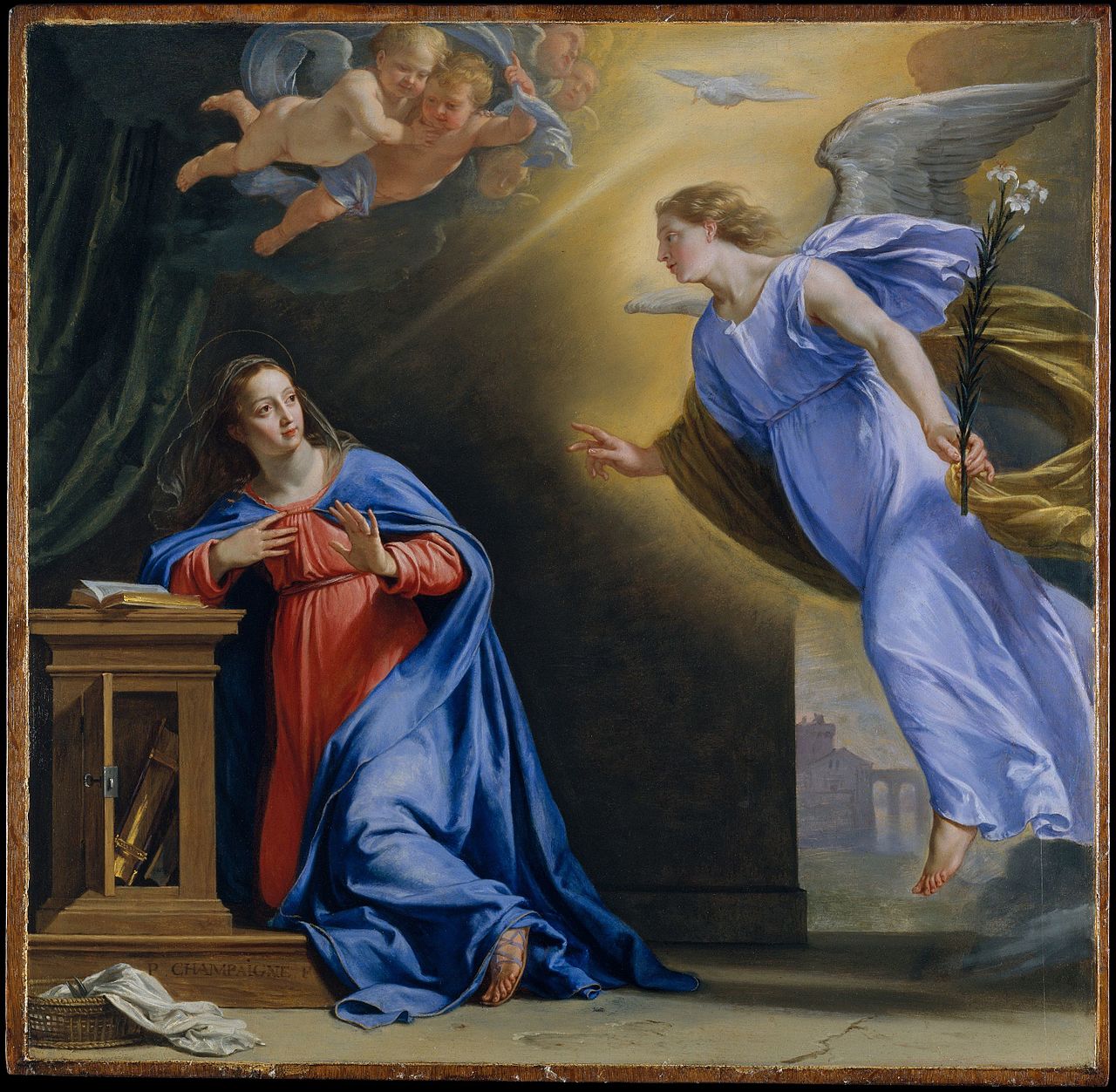
The image of an angel appearing before a young woman is familiar to us from its countless depiction by artists. A sense of what might have been happening at that moment for this very young woman is conveyed most hauntingly by Edwin Muir in his poem The Annunciation.
The angel and the girl are met.
Earth was the only meeting place,
For the embodied never yet
Travelled beyond the shore of space.
The eternal spirits in freedom go.
See, see, they have come together, see,
While the destroying minutes flow,
Each reflects the other’s face
Till heaven in hers and earth in his
Shine steady there. He’s come to her
From far beyond the farthest star,
Feathered through time. Immediacy
Of strangest strangeness is the bliss
That from their limbs all movement takes.
Yet the increasing rapture brings
So great a wonder that it makes
Each feather tremble on his wings.
…
But through the endless afternoon
These neither speak nor movement make,
But stare into their deepening trance
As if their gaze would never break.
Muir’s words capture the inner experience of this young woman, an experience we occasionally we may also share, that deeper awareness of another order of reality.