I have a statue of a holy man made from driftwood and bronze by the sculptor Peter Eugene Ball, who has in one hand a stand for a candle. When our meditation group meets, the candle is lit, acting as a reminder that throughout history, there have been women and men who have acted as light bearers, pointing the way forward. It is also a reminder that each of us, in the words of Anthony Stevens, ‘carries a single light for humanity’.
Author: James Roose-Evans

Learning to live with doubt
I have been thinking of an imaginary epitaph for a stillborn child:
If I am so quickly done for –
What on earth was I begun for?
Even today, many women experience carrying a living child within them only to find it stillborn. If, as I believe, we each come into the world with a purpose, a life to be lived to the full, how do we explain this? And in the past, before the introduction of contraception, vast numbers of women would give birth to twelve or more children, many of whom were stillborn or who died at an early age. This is but one of many mysteries, and it is easy to become cynical and decide that life is ultimately meaningless. The Psalms express all this most vividly, being a record of the long years spent by the Israelites in foreign countries and in the desert, journeying towards the Promised Land. Even in their darkest moments, they are able to say, ‘Yes, though I walk through the valley of shadow and of death, thy rod and thy staff comfort me.’ And so we persevere with our meditation practice in an act of faith.
On relationships
Friction can arise in the best of relationships when daggers seem drawn. What the practice of meditation enables us to do is not to take such confrontations personally but to understand where they are coming from. Let me give you an example. Some years ago, a close woman friend and colleague sent me out of the blue a six-page letter demolishing my life and work. I did not take offence, as I realised this was coming from a dark place within herself. I wrote to say: the bridge is down, but come to lunch and let us rebuild it. She came to lunch; no reference was made to the letter, but she was clearly relieved that our friendship was not broken, and we have continued to be close friends.
Another stumbling block!
The word prayer is one such… We know only too well that we can pray for this and that, yet our prayer goes unanswered. If by prayer for someone we are simply saying ‘O God please make Lucy better’, I am not sure what effect just saying that has. When we pray, as I have mentioned in the past, we need to spend time holding that person in our awareness, reaching out to them, but it is important to let that person know we are doing this for them, whether we hold them in the silence for ten minutes or, in extreme cases, for a whole hour. If someone is in grave trouble or about to have a major operation, simply on a human level, that person knows they are not alone. Our holding them thus may simply act telepathically – and telepathy is a natural gift that we do not use enough – or it may act at a deeper spiritual level. We need to uphold one another in prayer.
Some practical benefits
Disenchantment with materialistic values has led to an awakening of interest in the many forms of meditation, from the 1960s onwards, especially mindfulness meditation, which has been adapted from Buddhist techniques. Its medical use as a contribution to various forms of psychotherapy has been widely embraced.
Meditation can also serve as a special preparation for a demanding task, such as a musician, dancer, or actor before a performance, or when we are faced with a major responsibility. Meditation may take the form of repeating a specific word or text, as with the Hindu and Buddhist mantra, the Islamic dhikr, and the Jesus Prayer. It can also focus upon a visual image, as in the Tibetan Buddhist use of the mandala (a Sanskrit word which means circle) as a focal point for one’s meditation.
What’s in a name?
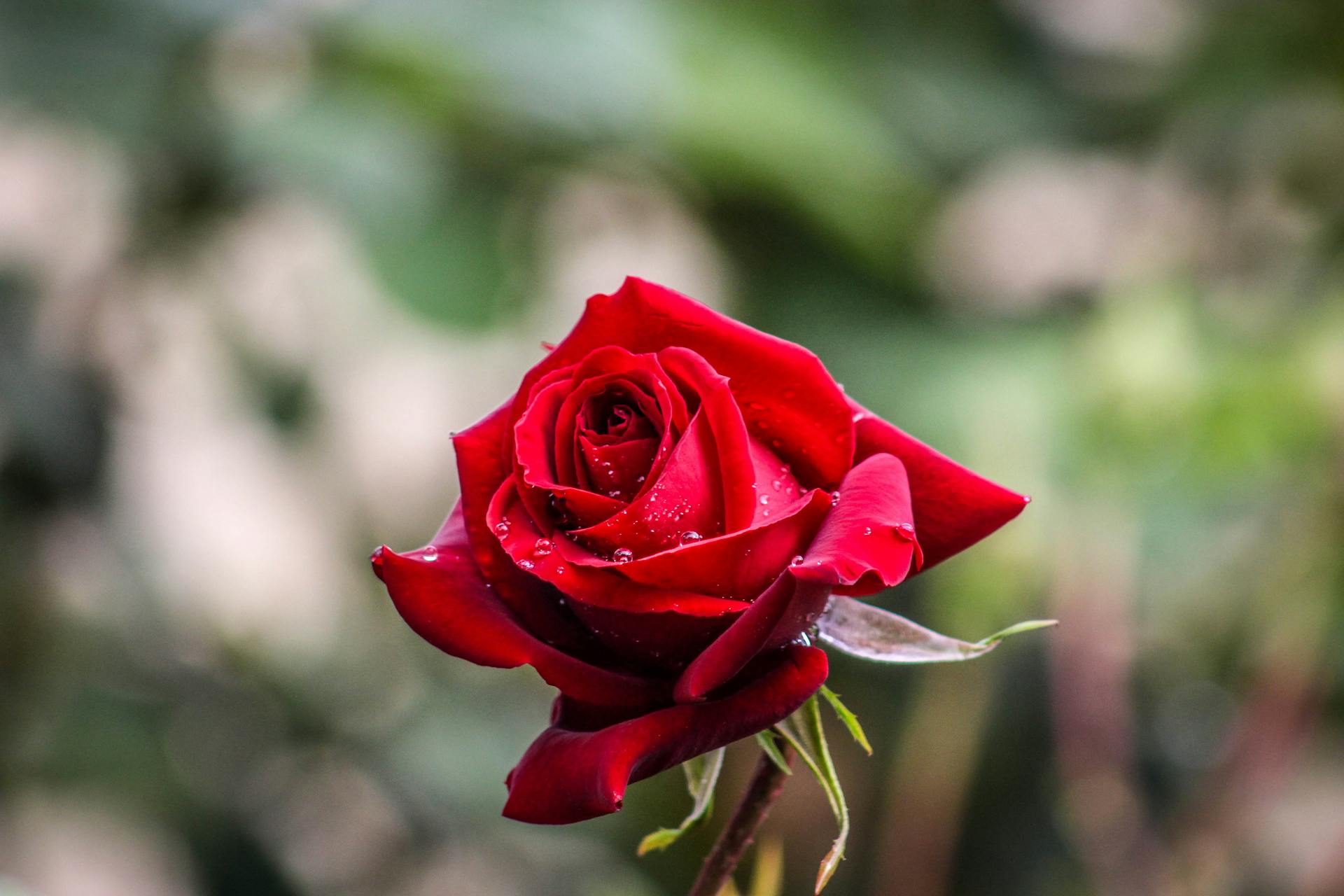
There is the expression ‘Blessed be the name of God’ just as sometimes we think of someone who is very special to us and we say ‘Blessed be Hywel’s name, or Christina’s.’ The name, however, is just a label. A rose by any other name will smell as sweet. It is only when we smell the rose, and experience its colour and shape, that we experience the rose. And so it is only through sitting quietly that we begin to experience that which we may call God.
That stumbling word
The word God has increasingly become a stumbling block for so many. What is important to grasp is that God is not a person, neither male nor female. As Meister Eckhart wrote, ‘God is no thing’. The nearest we can get is that of a cosmic energy and intelligence behind this universe. For myself, God is like an ocean of Love in which we live and move and have our being. But first we have to learn to swim!
The eternal mother
The story of Mary in the Gospels moves me by her sheer silence. When she and her husband take the baby to be blessed she is told that her heart will be broken. The next we know is that when Jesus is taken to Jerusalem for his bar mitzvah he is found talking theology with the scribes and, when rebuked by his mother, makes the enigmatic remark that he is about his Father’s business. We read how ‘Mary bore all these things in silence.’ For thirty years Jesus lived at home, as far as we know, until he discovered his vocation – why so late? – and left home to fulfill it. His mother then has to suffer being publicly rejected by him, ‘Woman, what have I to do with you?’
Thereafter silence. At the end, when Jesus, weak from the loss of blood, is hoisted onto the cross, his feet and hands nailed to the wood, his cries of pain echoing those of the hundreds of other crucified Jews around him, there she is, at the foot of his cross, silently keeping watch over his last hours.
It is not surprising that subsequent generations projected onto Mary the archetype of the Eternal Mother, and that she has commanded such devotion over the centuries. As St Bernard of Clairvaux wrote, ‘In danger, in doubt, or difficulties , think of Mary, call upon Mary.’
At the threshold
Dionysius the Areopagite wrote, ‘It is in that Silence that we learn the secrets of the Darkness that fills with a brightness more beautiful than beauty the minds that know how to shut their eyes.’ Often as we sit in silence we become aware that we are seated at the threshold of a vast ocean of love and knowledge that is beyond words.’
Holy ground
The sacredness of modern life has too often been obscured by the idea that the only holy place is the built church. Such a notion is wholly at odds with the idea teaching that God is present in all places; while Jesus’ own specifications have nothing to do with buildings, but rather any place ‘where two or three are gathered together in my name’. The ground on which we all stand is holy ground. It is good to recall the words of the Sufi mystic, Rumi: ‘I searched for God and could not find Him. I looked into my heart and there I saw Him. He was nowhere else.’